
|
||||||
|
|
||||||
|

CHRISTIAN & CATHOLIC FASTING - FROM DOGMA & EXTERNAL RELIGION TO TRUE BREAKTHROUGH AND PERSONAL RELATIONSHIP WITH GOD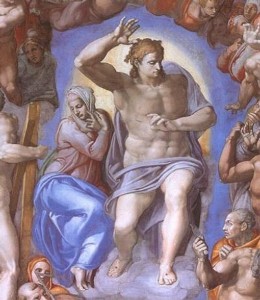
THE FOCUS OF CHRISTIAN & CATHOLIC FASTINGI want to talk some more about Christian and Catholic fasting and how The Lord uses it to purge and speak to us.The whole point of this discussion is to go beyond any type of dogma or religious ritual and talk about fasting as a means to penetrating the spiritual world for revelation, deliverance, freedom and a true encounter with the Almighty creator of the heavens and the earth. We are not here to put down any type of religious observance, however. Tradition and external religious practices are very positive and give us a sense of spiritual discipline and behavior. The problem is when the external practice becomes the whole end of spirituality in itself, at which point it can be empty and even judgmental and destructive. I love the passage in Matthew 6:16-18 where Jesus clearly speaks about the PROPER and IMPROPER conditions of the heart while fasting. Our Lord says: "When you fast, do not look gloomy like the hypocrites. They neglect their appearance, so that they may appear to others to be fasting. Amen, I say to you, they have received their reward. 17) But when you fast, anoint your head and wash your face, 18) so that you may not appear to be fasting, except to your Father who is hidden. And your Father who sees what is hidden will repay you. Catholic fasting is NOT a time to 'show off' or to be letting others know of what we are doing 'to impress' or to somewhow let people know how 'holy' or religious we are. As Jesus said, if this is the attitude, then the reaction of other people, in and of itself, will be the ONLY reward that such fasting will produce. The correct way to fast, Our Lord emphasized, was to take care of our appearance and behavior in such a way as to NOT make what we are doing evident to others. It is the condition of our hearts which God is after, and the TRUE spiritual rewards come when we practice christian and catholic fasting with humility and reverence before the Living God. What others think, say or do not say is, in truth, irrelevant. Religion for the sake of religion WITHOUT INTERNAL SUBMISSION AND SPIRITUAL AWARENESS may look good 'on the outside' (even Michael Corleone went to mass, remember?), but it produces ZERO results in the human heart, which is - by far - the place where God's presence, healing and guidance is MOST needed. I have discovered that christian and catholic fasting is best spent when the emphasis is placed on prayer and reading the Word of God. Bowing our hearts in front of Him who has All power, and allowing Him to cleanse us and empower us to do His Will. IT'S ALL ABOUT HIM, NOT MEChristian and/or Catholic fasting as we are discussing here is Not to get God to do what WE want. Rather, it is so that we can become more like Him. That, of course, is not to say that one should not have petitions while fasting or a particular need or challenge that needs God's intervention. After all, He is our Father and loves us more than any of us can possibly understand. What I am talking about is people who use fasting as a "spiritual shopping list" without any desire as to what God may want from them, or even giving Him the Glory just because He is who He is. Everything else should be set aside as you are able. If you are unable to separate yourself for this purpose, then try to maintain a prayerful state-of-mind as you go about your day. Christian and Catholic Fasting is a powerful practice that places you face-to-face with the Spirit of the Living God. It ought not be trumpeted to all that you are fasting. It is a very personal and sacred time of prayer, worship and meditation. A time of reviewing our lives and the challenges we are facing. Christian and Catholic fasting is a time when we realize that without Christ himself we are very limited. That HE is and should always be the center and source of our lives in every way, shape and form. If you reached this page it is because, in some way or another, The Lord may be trying to pull you into an even more intimate relationship with himself. Christian and Catholic fasting can definitely take you there if you are willing to undergo a little sacrifice. While weight loss is a byproduct of any type of fasting, in this case the main focus is spiritual growth and closeness with God. FASTING OPPOSITIONA lot of Christian and Catholic believers I talk to tell me that fasting is not necessary anymore because in the bible Jesus disciples did not fast. Therefore, they say, fasting is a practice from the Old Testament and does not apply to present-day individuals.Also, they say, Jesus in various parts of Scripture said the Pharisees that fasted were hypocrites seeking the approval of men. Although Jesus often taught on Fasting (Mark 2:18; Luke 2: 37), and He, Himself, Fasted (Matt. 4:2), He did not insist on it. He berated the Jewish leaders for talking bad about His disciples for not fasting. So why didnt they fast then? They did not fast because Jesus was there with them in person. As long as the Son of God was present, there really was not need for fasting. Yet, Jesus said, one day the Bridegroom (himself) will be taken away and then they will fast. I had to become personally convinced that Christian and Catholic Fasting WAS relevant and important. I hope you come to that realization as well! The passage most anti-fasting believers quote is Matthew 9:14-15. This passage continues the narrative of Matthews feast, during which time both the Pharisees and John the Baptists disciples were troubled because Jesus was feasting among sinners and tax collectors. John the Baptist would minister with passion and conviction, demanding repentance and fasting (Matt. 3:1-11). But he would withdraw at night to fast and pray to the exclusion of everyone not in his inner circle. Jesus, on the other hand, was instead eating and socializing with 'undesirables.' To John and his disciples, the definition of holiness was apparently isolation, for which reason they did not understand Jesus conduct. Jesus, like John the Baptist, also preached with power and conviction about repentance and the Kingdom of God. But, instead of isolating, he was willing to meet with anybody, anywhere. He did not leave the people behind but spent his time continually teaching, ministering and healing them. Jesus in essence was giving us a clear-cut example of how we as believers ought to behave while in this world. Jesus modeled fasting, but did not demand it (Luke 4:2; Matt. 6:16-18). Consequently, a lot of believers take this passage to mean we do not have to Fast. But, is that the point? 
CATHOLIC FASTING & THE HEART'S CONDITIONChristian and Catholic Fasting are at the very core an expression of humility and worship to God the ultimate authority over our lives and all of creation.But the religious leaders in the days of Christ would distort fasting and turn it into a dog-and-pony show with ultra-pious, fraud-like devotions. Their behavior was anything but holy. It put pride and self on a pedestal the total opposite of what Christian and Catholic Fasting are meant to display. Although Moses, Elijah, and Jesus fasted for as much as forty days and forty nights, Christ in his teachings placed more emphasis on attitudes and motivations. External practices took a back seat in terms of importance. What this means basically is that the most important part of Christian and Catholic fasting is not so much the not eating, but rather the internal attitude of humility and worship toward our Creator. Christian and Catholic Fasting is important, and a wonderful way to draw near to God in faith and humility, so long as it is done with reverence and obedience, free of hidden agendas, and not used as an attention-gathering device (Matthew 6:16-18). I can tell you from personal experience that, in my early days of fasting, sometimes I would do it because I wanted God to do something for me. This was an incorrect attitude. Rather, I now enter fasting by placing myself at His disposal. Asking him what HE wants me to do and how I can best glorify His name not mine. THE BRIDEGROOMIn the days of a wedding feast would last seven days or more. During such festivities, a Fast would be considered as rude. It would distract from the purpose of the wedding, because fasting was associated with sorrow.Being in mourning would also be inappropriate, as well as heavy labor. If a death occurred, or a job needed to be done, the wedding was put off until the right time. If Jesus had gone ahead and isolated to fast with John the Baptist and the other disciples, he would not have been able to fulfill His mission. Jesus was not saying he was opposed to fasting or that it was no longer applicable, but rather that the feast was not the time or place in which to do it. Jesus does say, then they will fast. Christian and Catholic fasting being a means to draw close to God. In this case God was incarnate in their midst. It would have been silly for them to fast because Jesus was right there with them. Jesus, however, did acknowledge the importance of fasting indicating that Yes there would come a time in which the Bridegroom (Himself) would NOT be present THEN they would fast. Since the Bridegroom would not be there in person, they would fast to draw closer to Him in spirit and devotion (Acts 13:2; 14:23). This desire to draw near is at the very heart of the Christian and Catholic fasting we are talking about here. 
INVITATION TO RENEWALChrist is the beloved Bridegroom who beckons us to come closer to Him. To bring him our broken and weary selves so he can uplift us and fill us with His vision of our lives and what we ought to be - for His Glory.Through the discipline of Christian and Catholic fasting He gives us the wine of His blood, renews our skins, and clothes us in His righteousness. As believers, there are definitely occasions in which fasting is the proper thing to do. It is all about the timing, reason and attitude of heart and mind. Again, if Jesus had left the feast and gone off fasting, He could not have won over Matthew the tax collector who went on to be one of the 12 disciples. Perhaps Johns disciples were so caught up in their pursuit of piety they forgot why they were being pious. They could not see who Jesus was, what His mission was, or what He was really doing at the home of Matthew, an admitted sinner. WHEN YOU FASTJesus starts the passage in Matthew 6:16-18 by saying, when you fast, He knew that Christian and Catholic fasting would be an important part of our spiritual growth. He did not say, if you Fast! The main reason I should Fast? Because God loves us and called us to do it.Fasting is the way we best deal with our sins, learn about ourselves and others, and grow in our walk with Him. Lets look at some of the main reasons why Christian and Catholic fasting is so important for us as believers. One vital element of Christian and/or Catholic fasting is that it Takes Attention Away from Self. In the passage of Matthew 6:16-18, Jesus sternly warns of abusing Fasting by using it for a show and tell game to draw attention to oneself. This behavior misses the real purpose, which is drawing close to God, and seeking His will for ones life and church. This passage is in the context of pleasing God, where Jesus places Fasting in the ranks of prayer, spiritual commitment, and trusting Him, making it a vital, if not paramount component of spirituality, and of growing deeper in our Christian formation/spiritual growth. Further in this passage, Jesus tells us to put oil on your head and wash your face. In other words, walk around clean and looking proper. Dont go around grimacing and calling attention to what you are doing. If so, the passage says, then whatever pity or attention you get will in itself be your reward. I dont know about you, but human power is not what I am seeking when I fast. Right? The purpose of Christian and/or Catholic Fasting is to draw attention to Christ and His glory. This is a sharp contrast to many of the Jews, who rather than being inconspicuous would put ashes on their heads and wear a very itchy and uncomfortable piece of lothing called sackcloth. They would sit in the public areas so all those walking by would feel sorry for them and think that they were spiritual giants. A total fraud. This way, when Friday evening or Saturday came, these people attained honor and respect in the temple (Zech. 7:1-14). That is why Jesus was so harsh with them. It was a show and pretence; they were only faking to glorify themselves. Another of the reasons for fasting is that Christian / Catholic fasting breeds humility. When one stops eating for a season, it is easy to realize just how fragile we are and dependent on God. We realize that life is not all about me God is the One who is to lift us up; when we try to lift ourselves up, we become prideful and believe our human power is the ultimate authority not God. Christian and/or Catholic Fasting has a way of removing the pride of me and humbling us before the presence of the Almighty. (Ezra 8:21-23; Psalm 35:13; 69:10)! Still another important factor of fasting is that it leads us to repentance. In Jesus time, following the Mosaic Law meant that the Jews were required to Fast at least once annually, which they did. Fasting was a part of their culture and mindset, something that has disappeared from ours. Jesus earthly disciples Fasted along with their fellow Jews during the Day of Atonement (Lev. 16:29-31). This was a Fasting of contrition, which means coming before God, having remorse for one's sins, seeking His forgiveness, pledging repentance, and doing penance (following the requirements of the Law for atonement, such as sacrifices of food or animal), and not doing them (sins) again. Paul followed this law, as depicted in Acts 27:9. Fundamental to Christian and/or Catholic fasting is prayer. Fasting focuses us upon the things that are important, and prayer is certainly at the very top of that list. Christian / Catholic Fasting focuses our attention; it keeps us away from distractions so our prayers are more intense, sustained, attentive, and real (Matt. 17:14-21; Mark 9:14-29; Acts 13:1-3; 14:21-23). Togetherness in prayer equals powerful spiritual synergy (Matt. 18:19-20). If you lead a church or organization and you have trouble making decisions, or have disunity, Fasting, along with prayer will do you wonders. Real, authentic Christian formation is developed when we give up the rights to ourselves, and hand over our will to Christ. In so doing, we begin to understand what is important in life, and experience true freedom, as the chains of slavery formed by our self-willed actions and thinking are broken. Christian / catholic fasting is a fundamental part of this renewal process. We become transformed and renewed by what He has done, which works more deeply and more powerfully as our devotion increases, and we become more aware of whom we are in Him and become better used by Him! Isaiah 58 challenged the Jews, prior to their captivity, and maintained that their Fasting was empty of purpose, pretentious, vain, and not pleasing to God. Jesus calls us to righteous giving, that of giving to others in order to please God. We are not to seek to please ourselves, and certainly not others. When we only seek the praise of others, our giving becomes fuel for selfishness, and God is not glorified. 
CATHOLIC FASTING & HEART DETOX - THE CLEANSING OF THE SOULAre You Living a Life of "No Regrets"? Chrsitian / catholic fasting can help to purge the soul of all that stands in the way.At the time in which our lives on earth come to an end, it certainly won't be the celebrations, wins, awards or financial deals we did which will be important. The only thing that will matter at that point will be what we did to make a difference in the lives of our loved ones, and humanity in general. Did we live a life of humility, godliness and self-sacrifice? Or did we live only to satisfy our fleshly lusts? As human beings we are all mixed bags of good and bad. There is nobody who is perfect. So I am by no means writing here that unless you are perfect you should not feel good about your life. What I DO wish to do, however, is to make you think about this: what is most important in your life, and will this really matter if today was your last day on earth? Just as the body needs to be cleansed through christian and catholic fasting, so does the "inner man" need frequent times of internal cleansing, heart detox if you will... so that we can be refreshed and "detoxified" from the world and life's challenges. I say this because, in my case, the mind can easily become totally immersed in worry, tension and fear over things that, in the grand scheme of things, aren't really that important. Or maybe you have been backsliding in your life and have been partaking in activities that you know aren't the healthiest. Whether it be drinking, drugs, illicit sex, pornography, infidelity, lying, cheating, stealing... (you name it), fasting can help you to come back "home" so that God can begin to cleanse and heal you. But you must "want it." The realization must come from you that change is needed, and that you do not want to reach the end of your life filled with "what if's" and regrets. It is best to submit to God NOW and allow Him to cleanse and heal us with love. Yes! I speak from experience. I am not a saint no and I certainly wasn't one before. In fact, I lived for gluttony and gluttony alone. I was so stuck in food addiction that I cared nothing about anything or anybody. All I wanted was to eat, eat, eat and eat. And along with the eating came lots of drinking and other types of undesirable behavior. As you may have read in my testimony page, fasting has had a large role in my transformation. It is the tool God utilized to reach me and, today, I can tell you that - even though I am far from perfect - I no longer partake in any of the self-centered activities that I used to. I mean, I have a LONG way to go by all means. But Praise God, I am not the man I used to be! That is where I would like you to be. In the place where you know that you are moving in the right direction towards your ultimate good. I want to impress upon you the importance of taking action IMMEDIATELY to break free of anything that has been harming you or leading you to behave through unhealthy values. On that day of departure from earth, there will always be "some" regrets. The father who left his wife and son who wished he had stuck around and supported his family, the drug addict who was given opportunity to change his life but refused to do so, the career person who valued money more than people and ended up alone... the list can go on and on and on. If any, what would be your regret if you were to die tomorrow? At the time you stand in front of Christ and the video of your life is examined, what's going to discovered? Are you gonna be viewing a superficial, ego-centric individual pursuing purely selfish goals, or will we see a man or woman perpetually submitting to God and growing in faith and effectiveness? Or will it be a mixture of both? I tell you dear friend, I can look at my own life first and foremost and tell you that, to this day, there are things in my life that I am not proud of. I do not see as much of Christ in me as I wish I would. I often feel that I am more of a shame to the Kingdom of God than an asset. Yes, I feel that shame and that that pain also. That is why Christian / Catholic fasting is so important. But, PRAISE GOD, it is NOT what I do or NOT do what gives me favor with God. It is my constant reaffirmation and faith in the finished work of Jesus Christ in the cross of Calvary, and the reliance in HIM and HIM alone. THAT is what gives me the hope and the joy in knowing that I am accepted in God's sight. And so are you my friend. So are you! It can be sooooo simple to justify selfish behaviors. After all, everyone does it, right? Nevertheless, all of us understands and is pretty much able to distinguish wrong from right. You would like what's right, and that's the reason you're probably in this website. You might be pursuing an solemn hunger in your heart for a more profound relationship with. And you have become entirely ready to do what it takes to make this change once and for all. You are prepared to practice christian and catholic fasting, ready to transform your life, ready to endure whatever discomfort. You are willing to do all of these things because you realize that the worst discomfort you may feel is SMALL in contrast to the HUGE benefit of being free and able to reach your highest expression as a unique creation of The Living God. To be practical, take an inventory of what is most important to you. Specify in detail exactly why these things are important and what you are doing right now to reach those goals. Do this while fasting and each day, spend as much time as possible refining and adding detail to it. For example, elaborate on this: If you could live the ultimate life and be of the MOST use to God and your fellow man, how would you be? What areas of your life would need to change and how? What qualities would you need to carry this out? How many of those do you already possess? Which ones do you still lack? And, very important: What would you say is the biggest obstacle you have in your life now which keeps you from living the life that you most desire? Is it an addiction? A bad habit? Unhealthy values? Associations? Be specific. Remember, this catholic fasting journal is NOT for public dissemination. This is between YOU AND GOD. So hold nothing back... pour all of your heart and soul into the task. Pray and believe that, through catholic fasting - and most of all your willingness to submit to God - your life will be transformed so that you CAN achieve all of your goals and bring honor and praise to Your Creator. That is the Ultimate life that any of us can strive to live. So, when that final day does arrive, the column of regrets and disappointments will be much lesser than the one of praise and joy for a job well done! Let's move forward from catholic fasting to Lent Fasting to have a look at how fasting is practiced in the Easter/Lenten season. Return from Catholic Fasting to Spiritual Fasting MAIN.
|
||||||
SEARCH THIS SITECOMMUNITY TOOLBOXFASTING DISCUSSIONSRESOURCESSPECIAL REPORTSNETWORK SITESLINK PARTNERS
|
||||||
|
||||||




New! Facebook Comments
Speak your mind about this fasting/health topic ... :-)